


Changing thermal energy sources from fossil fuels to renewables
Heat energy sources in industry are the foundation of many companies' operations and have a huge impact on the level of emissions and energy efficiency of enterprises. Although fossil fuels still dominate in many industries, the importance of renewable thermal energy sources and heat recovery technologies is slowly growing. Changing heat sources is not only a step towards climate neutrality but also a real chance to optimize costs, increase energy independence, and improve a company's competitiveness. For many industrial plants and combined heat and power plants, this is the starting point for implementing an energy transformation and decarbonization strategy.
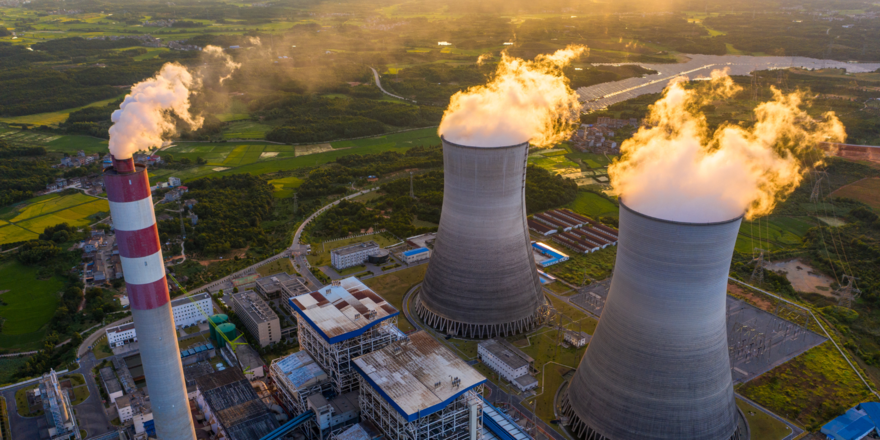
Conventional thermal energy sources
Conventional heat sources are those that use fossil fuels to generate thermal energy. Their biggest advantage is high availability, predictability of supplies, and relatively low investment costs compared to some renewable technologies. The most commonly used solutions in industry and heating include:
- Hard coal and brown coal
These are among the oldest and still widely used fuels in Polish industry and CHP plants. Despite high CO₂ and particulate matter emissions, coal is used due to the still relatively low technical cost of energy production and the existing infrastructure.
- Natural gas
It is a popular compromise between efficiency and lower emissions – often called a transition fuel between fossil fuels and renewable sources. It is easy to store and transport, and gas boilers are characterized by high efficiency. Additionally, natural gas works perfectly in high-efficiency cogeneration systems (CHP).
- Heating oil
Used mainly as a reserve fuel in industrial installations. It is more expensive and more emission-intensive than gas but allows for maintaining continuity of production in the event of a failure or lack of other energy sources.
- Cogeneration based on fossil fuels
Generating heat and electricity in one process increases the efficiency of fuel use, which translates into lower unit energy consumption and reduced emissions compared to separate production. Cogeneration can be carried out using most available fossil fuels.
Here you will find our article on the future of fossil fuels in Poland and Europe.
Renewable or low-emission sources of heat energy
The rising costs of CO₂ emissions, EU climate regulations, and the availability of investment support programs mean that renewable heat sources are increasingly replacing technologies based on fossil fuels. Among the main solutions used in industry and CHP plants, it is worth mentioning:
- Biomass
This is one of the most popular renewable heat sources. In the form of wood chips, pellets, or plant residues, it can be used in dedicated boilers or co-fired with coal. Biomass is considered neutral in terms of CO₂ emissions.
- Biogas
Produced from organic waste in biogas plants, often on the premises of the industrial plant itself. It can be burned in gas engines or boilers, offering a local, low-emission source of heat energy.
- Heat pumps
In large industrial installations, water-to-water or air-to-water pumps are used, which obtain heat from the environment or from industrial processes. Currently, they can power both low- and high-temperature systems, and their positive impact on the environment can be enhanced by combining them with photovoltaics.
- Geothermal energy
Locally available in selected regions of the country, it can be a source of low-emission heat all year round. Geothermal installations are used in heating systems and for heating large industrial facilities.
- Photovoltaics
Photovoltaic installations, although less effective in winter, can in some cases support the production of hot water and the electrification process in industrial plants.
- Heat recovery from industrial processes
This is a particularly important source on the way to decarbonization in energy-intensive plants, where high temperatures are necessary to carry out the technological process – there it is possible to reuse waste heat from furnaces, compressors, cooling systems, or exhaust gases.
Why are conventional fuels still popular?
Despite the EU's ambitious decarbonization plans, conventional fuels – especially natural gas – are still a popular choice in many industrial plants. The main reasons are:
- supply stability - the infrastructure for distributing natural gas and coal is well developed,
- low costs - investing in a gas or coal boiler is cheaper than, for example, a high-power heat pump,
- high predictability of heat production - regardless of weather conditions, stable energy value of the fuel,
- staff experience - the operation and maintenance of conventional heat sources are well known in plants.
In the long term, maintaining such sources is associated with increasing environmental and regulatory costs, which is why companies are increasingly considering scenarios for their replacement or at least diversification.
Benefits of heat source modernization
Changing heat generation sources brings a number of tangible benefits:
- lower primary energy consumption thanks to the higher efficiency of renewable sources and cogeneration systems,
- reduction of CO₂ and dust emissions, which translates into lower allowance costs and greater compliance with ESG regulations,
- possibility of obtaining funding under national and EU programs, e.g., FEnIKS or KPO,
- building the image of a responsible manufacturer, which is increasingly important in relations with partners and customers.
"Modernization of heat sources is one of the most direct and cost-effective ways to reduce greenhouse gas emissions and improve energy efficiency in industry. Switching from coal to gas, biomass, or heat pumps can reduce the plant's emissions by several dozen percent. In many industrial plants and thermal energy companies, changing heat sources is the first and most important element of a zero-emission strategy. Investment in renewable sources or modernization of existing heating installations often has the greatest potential to reduce CO₂ emissions among all available actions." says MSc Eng. Katarzyna Kuśnierz, Project Manager at DB Energy.
Summary
Replacing heat generation sources increases not only energy efficiency and environmental compatibility but also the operational resilience of enterprises. Diversification of heat energy sources – by combining, for example, cogeneration, biogas, and heat recovery – allows for maintaining continuity of production in the event of fuel supply interruptions or price spikes. Given the current instability of energy markets, investments in local, renewable sources are becoming an important element of the strategy for reducing energy risk.
Although modernization of heat energy sources may require significant investment outlays and technical analysis, its long-term benefits outweigh the costs of implementation. Optimization of the heat generation system in terms of emissions, efficiency, and operating costs brings a lasting improvement in the plant's energy balance. Especially in heating plants and combined heat and power plants, where changing sources to less emission-intensive and more efficient ones is practically the only possibility of implementing decarbonization, such a step may be the most important on the way to achieving net zero.
Capital group


Company data
DB ENERGY SA
Al. Armii Krajowej 45
50-541 Wrocław
NIP: 894 299 53 75
REGON: 021249140
Contact
+48 71 337 13 25 biuro@dbenergy.plfor general purposes sprzedaz@dbenergy.plfor commercial purposes
In 2014 the R&D department started to work in our company. We design solutions to improve energy efficiency in industry.
On 22 June 2016, DB Energy signed an agreement with the National Centre for Research and Development to co-finance R&D work for a project called "Development of an innovative drive diagnostics system (DiagSys) based on electrical signal measurements characteristic of mechanical damage to rotating machine components, together with a specialized analyzer of machine operating status and efficiency (APPS 3)".
The project is financed under the Intelligent Development Operational Programme 2014-2020, under sub-measure 1.1.1. "Industrial research and development work carried out by enterprises". No. of the competition: 1/1.1.1/2015. Value of the project 5 974 021.85 PLN. Value of co-financing 3,727,676.11 PLN.
The aim is to develop a system for the diagnosis of rotating machines (DiagSys system), which will be based on the use of power measurements and on-line access to an expert database.

