


Electrification of industry – the first step towards zero-emission and cheaper production
Rising gas and coal prices, regulatory pressure related to the EU ETS system, and customer and investor expectations regarding ESG mean that more and more industrial companies are looking for ways to permanently reduce emissions and energy costs. Electrification of industrial processes – replacing technologies based on burning fossil fuels with devices powered by electricity – is becoming a natural and profitable direction of transformation. It is not only a step towards decarbonization and compliance with climate regulations but also a chance to become independent from the grid by using one’s own energy sources.
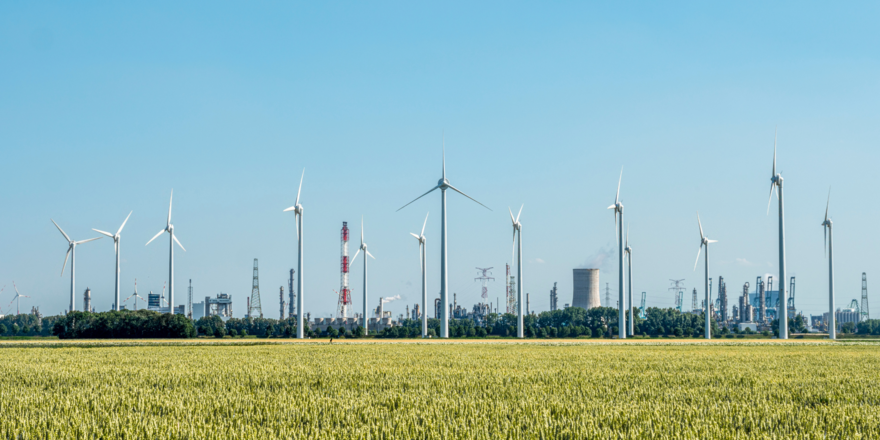
Electrification of industry consists of replacing technologies and devices powered by fossil fuels with their electric equivalents. This includes both heat sources (e.g., boilers, furnaces, heaters) and machine drives or internal transport systems. Electricity is becoming the main energy carrier in the plant and, where possible, comes from renewable energy sources (RES) or high-efficiency cogeneration.
How does the electrification process work?
The electrification process of an industrial plant usually takes place in two stages. In the first step, the company replaces installations based on burning fossil fuels – such as coal-fired steam boilers, gas dryers, or combustion engines – with electrical devices. For example, water and steam boilers can be replaced with electric heaters, electrode boilers, or industrial heat pumps, which usually provide higher energy efficiency. On the other hand, combustion or steam drives are replaced with electric motors controlled by inverters.
In the second stage, after the electrification of sources, the plant can move on to "greening" energy, i.e., reducing the carbon footprint of the electricity supplied. This is done by investing in its own renewable energy sources (e.g., PV installations on the roofs of production halls or wind farms on plant premises), purchasing green energy with guarantees of origin, or implementing biogas or even hydrogen cogeneration, which ensures simultaneous production of electricity and heat from a single fuel with very high efficiency. Such a sequence – first electrification, then decarbonization of the power source – allows for spreading the investment over time and achieving environmental effects step by step while reducing costs.
Why change energy sources to electric?
The main goal of electrification is to reduce greenhouse gas emissions in Scope 1 by moving away from burning fossil fuels in favor of electricity, which can increasingly be obtained from low-emission sources. By changing the energy source, it is possible to become independent from the volatile prices of natural gas, coal, and heating oil, which can increase rapidly during crises and warfare in various parts of the world.
“Electrification makes it easier to meet environmental requirements and ESG standards, which are important not only in the context of compliance with regulations but also for the positive image of the company and its relations with business partners or financial institutions. In the coming years, the EU ETS system will become more stringent – free emission allowances will be withdrawn and the list of mandatory participants will be expanded, which will expose companies covered by it to additional costs. The transition to electric power also opens the way for further modernizations – such as integration with energy storage or flexible management of energy consumption – which increases resilience and energy security.” says Dr. Dominik Brach, Vice President of the Management Board at DB Energy.
Cost of electricity vs. cost of fossil fuels
Is electrification more expensive than traditional power supply, e.g., coal or natural gas? The answer is not clear – it all depends on the type of process, available technologies, and scale of operation.
Fuel price vs. energy price
In terms of energy unit (kWh), fossil fuels are often cheaper – especially coal. However, electricity can come from one’s own renewable energy sources or from cogeneration, which significantly reduces the costs of purchasing from the grid. Additionally, when using, for example, photovoltaic installations, which are practically maintenance-free, their operating costs are almost zero.
Operating costs
Electrical devices are easier to use, cleaner, and more reliable. For example:
- induction or electric heaters can have an efficiency of up to 95–99%, while the efficiency of coal boilers is often only 72–80%,
- no combustion means no need for flue gas cleaning, system cleaning, ash storage, etc.,
- as a result, the total operating cost (OPEX) can be lower, despite the higher unit price of energy.
Energy efficiency – electricity beats fuels
The electrification of industry is also associated with a significant improvement in the energy efficiency of devices used in production processes. For example:
- electric boilers achieve an efficiency of 95–99%, while steam boilers fueled with natural gas usually do not exceed 88–90% on average per year,
- induction furnaces are characterized by an efficiency of 90–97%, compared to gas furnaces, which rarely reach more than 60–70%,
- industrial heat pumps can have a coefficient of performance (COP) from 2.5 to even 5, which means that they supply several times more heat energy than they consume electrical energy,
- electric machine drives – especially synchronous motors or those equipped with frequency converters – offer an efficiency of 93–98%, which significantly exceeds many older combustion drives.
The high efficiency of these devices not only translates into lower energy consumption but also reduces heat losses and pollutant emissions, which is important both economically and environmentally.
Electrification and CO₂ emission reduction
From a climate perspective, switching from fossil fuels to electricity (especially green) is one of the most effective ways to reduce emissions in industry.
Lignite emits about 0.35 tons of CO₂/MWh, natural gas about 0.2 tons of CO₂/MWh, and energy from renewable sources – 0 tons of CO₂.
In the case where electricity comes from the grid, emissions are lower than in the case of coal combustion, and they can be further reduced by integration with PV, wind, or energy storage installations. Typically, a similar sequence is adopted when implementing zero-emission strategies – the first step is to maximize the plant’s energy efficiency, thereby reducing energy consumption, then the plant is electrified, and the electricity consumed is “greened.” In the case of net zero, residual emissions must also be compensated later.
Hybrid transformation model – energy from the grid, renewable energy sources, and cogeneration
Not every plant can immediately switch fully to its own green energy. That is why hybrid solutions are becoming increasingly popular, combining:
- energy from the grid (sometimes partially green),
- local renewable energy sources – e.g., photovoltaics on roofs and land,
- cogeneration – i.e., simultaneous production of heat and electricity, often from gas, biogas, or biomass,
- energy storage facilities, which have recently gained popularity and increase self-consumption and the stability of power supply from own green sources.
Such a model allows you to start the transformation in stages, reduce the carbon footprint, and minimize cost risk.
Electrification and zero-emission strategy
Electrification is an important element of industrial decarbonization. Companies that implement such actions gain:
- market competitiveness – more and more customers expect products with a low carbon footprint,
- better access to financing – banks and funds prefer “green” projects,
- lower risk of fees for EU regulations and easier adaptation to Fit for 55,
- possibility of ESG reporting with real progress.
Summary
Electrification of industrial processes is a necessary step towards a modern, sustainable industry. Replacing technologies based on fossil fuels with electric solutions opens the way to decarbonization, greater energy efficiency, and integration with renewable energy sources – which will become increasingly available and common in the coming years. Although changing energy sources requires well-thought-out investments, it brings long-term benefits – from lower energy costs to improving the competitive position in a market increasingly sensitive to the carbon footprint of products and services. Plants that choose electrification will gain greater flexibility and security, the ability to implement modern energy management systems, and be better prepared for future regulatory changes.
Capital group


Company data
DB ENERGY SA
Al. Armii Krajowej 45
50-541 Wrocław
NIP: 894 299 53 75
REGON: 021249140
Contact
+48 71 337 13 25 biuro@dbenergy.plfor general purposes sprzedaz@dbenergy.plfor commercial purposes
In 2014 the R&D department started to work in our company. We design solutions to improve energy efficiency in industry.
On 22 June 2016, DB Energy signed an agreement with the National Centre for Research and Development to co-finance R&D work for a project called "Development of an innovative drive diagnostics system (DiagSys) based on electrical signal measurements characteristic of mechanical damage to rotating machine components, together with a specialized analyzer of machine operating status and efficiency (APPS 3)".
The project is financed under the Intelligent Development Operational Programme 2014-2020, under sub-measure 1.1.1. "Industrial research and development work carried out by enterprises". No. of the competition: 1/1.1.1/2015. Value of the project 5 974 021.85 PLN. Value of co-financing 3,727,676.11 PLN.
The aim is to develop a system for the diagnosis of rotating machines (DiagSys system), which will be based on the use of power measurements and on-line access to an expert database.

