


How is an on-site inspection conducted as part of an audit?
A site visit is one of the most important stages of an energy audit at an industrial facility. During a direct visit to the facility, auditors can become familiar with the actual production processes, installations, and energy management. Without it, it is difficult to accurately assess the potential for energy efficiency improvement. In this article, we will explain exactly what a site visit is, how it is conducted, who should participate, and what elements are analyzed during it. We will draw on experience from over 1,500 audits conducted at manufacturing facilities – both as part of company energy audits and walk-through audits.
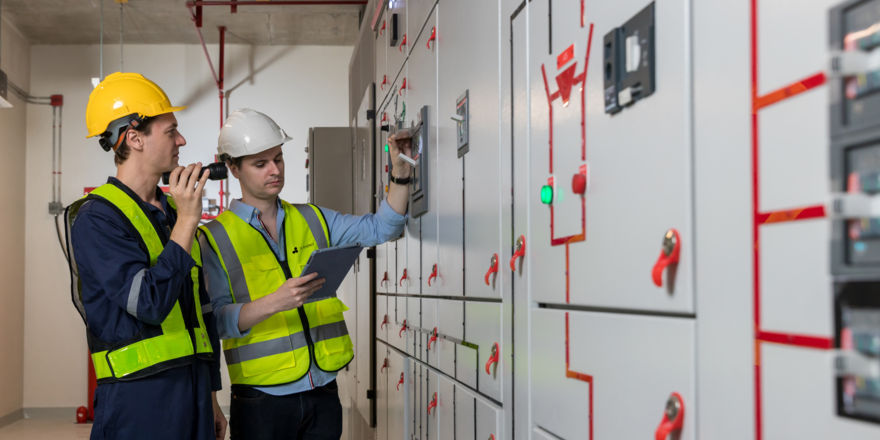
What is a site visit?
A site visit is a planned visit by an engineering or audit team to an industrial facility. Its purpose is to gain a firsthand understanding of the facility's operation – the flow of technological processes, the layout of energy installations, and the characteristics of utility consumption. This stage allows us to move from document analysis to a true understanding of how the analyzed facility operates – and thus, through analysis and understanding of the company's energy management, identify areas with the greatest savings potential.
In the case of corporate energy audits (mandatory for large companies under the Energy Efficiency Act) and walk-through audits (rapid energy inspections), an on-site visit provides the foundation for further analysis. It also allows us to determine the scope of necessary measurements, collect input data for energy efficiency models, assess potential modernization options, and plan further audit, conceptual, or investment activities.
Stage of an on-site visit – what does it look like in practice?
An on-site visit typically consists of two or three stages. While each facility may require an individual approach, certain elements remain constant regardless of the industry or scale of the facility. Immediately after receiving the work order, the company is sent a list of basic data necessary to understand the company's energy mix and prepare for the kick-off meeting.
- Opening meeting
The initial step in collaboration is typically a meeting between the audit team and representatives of the facility – most often those responsible for the business, environmental strategy, maintenance, energy consumption, automation, or technical infrastructure. The meeting aims to familiarize both sides and discuss:
- the company's strategy and audit objectives,
- the characteristics of the facility and its technological processes,
- the main energy consumers,
- the utilities used (electricity, gas, steam, compressed air, etc.),
- the existing energy monitoring systems,
- the facility's development plans (e.g., modernizations, expansions, new process lines).
This meeting allows for the development of a basic energy flow diagram, understanding how energy is used in the core technological processes, and determining the scope of further actions, including planning a plant walkthrough and specifying areas that require special attention.
- Plant walkthrough
The second part of the site inspection is a walkthrough of the facility – we often begin with energy sources/raw material supplies, then proceed through utility distribution networks to the production, packaging, storage, and distribution stages. The engineering team walks through boiler rooms, compressor rooms, main transformer stations, refrigeration and industrial gas plant rooms, networks and collectors, and then through production processes, main heat and cold distribution points, energy recovery systems, ventilation systems, and lighting. Analyzed areas include:
- main and auxiliary technological processes in terms of energy consumption,
- sources and points of energy loss,
- operation and technical condition of power equipment,
- control logic and potential for system optimization,
- waste energy utilization (if applicable),
- availability of measurement data and consumption monitoring.
This type of walkthrough allows us to verify theoretical assumptions and adapt the analysis to the actual operating conditions of the plant.
- Closing meeting
An optional but very helpful element of the site inspection is a short debriefing meeting. This takes place after the plant visit and allows for a discussion of initial observations, clarification of any doubts, and determination of the next steps – e.g., the scope of necessary measurements, further documents required to verify the observations made, or a plan for further contact.
Who should participate in a site visit?
An effective site visit requires the presence of people who are familiar with the facility and its operations. On the plant side, meetings and inspections are most often attended by:
- representatives of the maintenance department,
- persons responsible for energy consumption,
- process engineers,
- energy efficiency specialists (if present within the company),
- managers of technical departments.
This provides the audit team with access to practical knowledge, allows them to quickly clarify any ambiguities, and obtain the technical information necessary for further analysis.
What do we check during a site visit?
"The scope of observations and analyses during a site visit depends on the specific nature of the facility, the type of audit being conducted, and the investor's expectations. However, there are a number of areas that are almost always subject to verification. Auditors focus primarily on the layout of energy installations and how they are connected to production processes – this includes both the technological layout and its flexibility in meeting changing demand. A detailed analysis is performed on the main energy consumers, their operating characteristics, and any potential excess consumption resulting from suboptimal control. This also includes an assessment of the power supply systems, including their redundancy, efficiency, and their connection to automation and BMS/EMS, if such systems are present in the plant.’’ – says Anna Marchut, Project Manager at DB Energy.
A site inspection allows for the identification of energy losses – both those resulting from leaks, lack of insulation, and technological losses occurring in the process. Auditors also examine potential sources of waste energy and potential ways to manage them. The technical condition and operation of equipment are of great importance – not only the main equipment, but also auxiliary equipment such as pumps, fans, compressors, boilers, chillers, generators, and transformer stations.
Engineers also analyze the management of utilities – that is, how they are distributed within the plant, how their consumption is monitored, and whether measurement data is available to verify the energy consumption of individual process lines. The audit team assesses whether energy monitoring systems operate in a way that allows for the identification of anomalies and consumption optimization, or whether they rely solely on general meter readings. Equally important are operational conditions – that is, how the installation is organized in various modes (full load, night operation, weekend work, downtime), equipment rotation, and the practices used by technical staff in day-to-day energy management.
In the case of a walk-through audit, the on-site inspection is more general in nature – its purpose is to identify a long list of potential tasks, from low-cost improvements that can be called quick wins to larger-scale investment solutions. Based on this list, the most interesting course of action is selected, matching the plant's strategy and needs. Often, the choice of actions is also dictated by financial or implementation possibilities, for example, due to available technological breaks or delivery deadlines. Such verification with the company's goals often sheds a completely new light on many investments that can be implemented efficiently but are not obvious.
You can read more about the walk-through audit process here: Walk Through Audit – the first analysis on the way to decarbonization that pays off
Why is an on-site inspection important?
An on-site inspection is an important element of an energy audit. It allows auditors to learn how energy is actually used in the plant and where the greatest losses occur. This is also the moment when the foundation for further cooperation is laid – based on technical knowledge and direct contact with the plant team. Through a conversation during the on-site inspection, both parties can clarify expectations and resolve any potential concerns. It's also an excellent time to familiarize oneself with the expectations of the team handling the entire process on a daily basis – these individuals are most likely to see the first potential for energy efficiency improvement. The auditor's role is to analyze this potential and describe the actions taken, not only in the form of calculations and graphs, but also to indicate whether such a project will be profitable for the company.
Capital group


Company data
DB ENERGY SA
Al. Armii Krajowej 45
50-541 Wrocław
NIP: 894 299 53 75
REGON: 021249140
Contact
+48 71 337 13 25 biuro@dbenergy.plfor general purposes sprzedaz@dbenergy.plfor commercial purposes
In 2014 the R&D department started to work in our company. We design solutions to improve energy efficiency in industry.
On 22 June 2016, DB Energy signed an agreement with the National Centre for Research and Development to co-finance R&D work for a project called "Development of an innovative drive diagnostics system (DiagSys) based on electrical signal measurements characteristic of mechanical damage to rotating machine components, together with a specialized analyzer of machine operating status and efficiency (APPS 3)".
The project is financed under the Intelligent Development Operational Programme 2014-2020, under sub-measure 1.1.1. "Industrial research and development work carried out by enterprises". No. of the competition: 1/1.1.1/2015. Value of the project 5 974 021.85 PLN. Value of co-financing 3,727,676.11 PLN.
The aim is to develop a system for the diagnosis of rotating machines (DiagSys system), which will be based on the use of power measurements and on-line access to an expert database.

